

 language

-
Home
-
Products and Solutions
-
Keyto Global
-
News Center
-
Service Support
-
About Us
-
Contact Us
-
Language


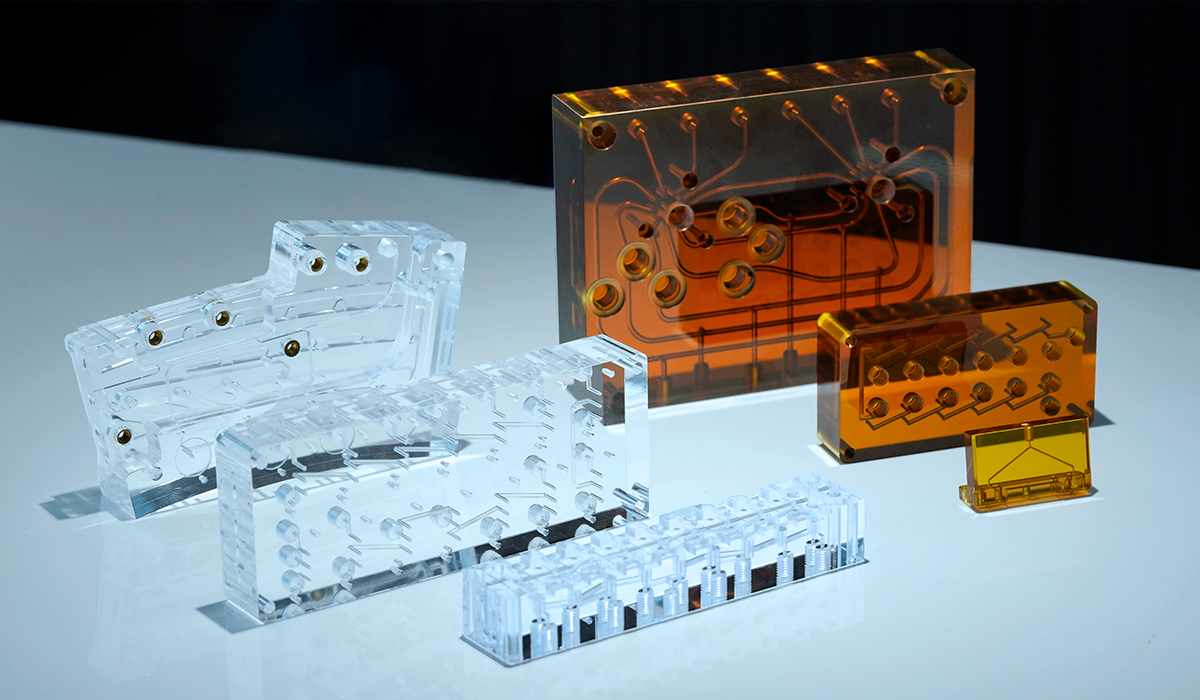
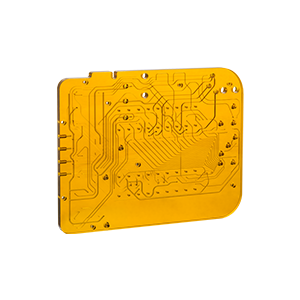
Keyto PEI Diffusion Bonded Manifold | Up to 5 Layers | Compact Multi-Path




Feature Bullets
-
Molecular diffusion bonding on PEI for robust, sealed internal flow paths
-
Up to 5-layer architecture to maximize integration density
-
Minimum channel feature down to 0.5 mm; channel tolerance ±0.01 mm (design dependent)
-
Multi-geometry channels (square/round/D-shaped) for performance tuning
-
Consolidates multiple workflow functions to reduce assembly complexity
-
Custom development support from concept to prototype and scalable production
FAQ
Q1: Why PEI (Ultem) for diffusion bonded manifolds?
A: PEI is typically selected for applications requiring stronger mechanical performance and stable structure in compact assemblies.
Q2: Can you build multi-level routing in one manifold?
A: Yes. Multi-level routing is a key advantage of bonded manifolds and helps simplify complex liquid-handling systems.
Q3: Do you provide DFM suggestions?
A: Yes. We provide channel/layout feedback to improve manufacturability, sealing reliability, and performance consistency.
A: Yes. PEI manifolds are often used as a fluidic base for integrating valves, pumps, and connectors in a higher-level assembly.