

 language

-
Home
-
Products and Solutions
-
Keyto Global
-
News Center
-
Service Support
-
About Us
-
Contact Us
-
Language

As 96-well and 384-well plates continue to define modern laboratory workflows, liquid handling performance is no longer just a convenience. It directly affects throughput, repeatability, integration complexity, and the overall reliability of experimental data. In applications such as qPCR, ELISA, molecular diagnostics, cell culture, and automated sample preparation, a pipetting system must do more than move liquid. It must deliver consistent results, fit into compact instruments, and support increasingly automated processes.
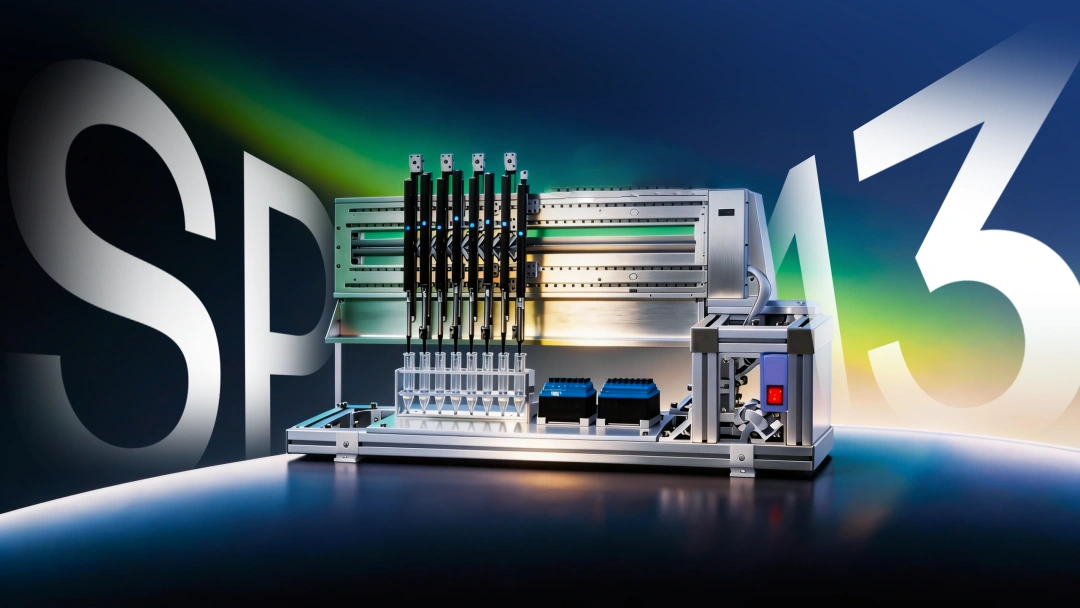
The refreshed MAP8 8-channel pipettor is designed with exactly these requirements in mind. With a redesigned structure, optional liquid level detection, compact 9 mm channel spacing, and support for programmable electric operation, MAP8 addresses several of the most common bottlenecks in multi-well liquid handling.
This article explains what the MAP8 is, where it fits, and why an 8-channel pipetting module can be a practical solution for laboratories and instrument developers seeking higher efficiency and better data consistency.
The MAP8 is an 8-channel pipetting module developed for high-throughput liquid handling tasks. Its channel arrangement is well suited to the standard 8 × 12 format of a 96-well plate, allowing one column of wells to be processed in a single action. It is also compatible with 96-well plates, 384-well plates, and deep-well plates, making it suitable for a wide range of assay and automation scenarios.
Unlike manual single-channel pipetting, an 8-channel system brings uniformity and speed to repetitive dispensing work. That matters in both research and production-facing environments, especially where reproducibility, time savings, and process standardization are critical.
In many laboratories, the shift toward higher throughput has exposed the limitations of manual pipetting. Single-channel operation is often acceptable for small-scale tasks, but once the workflow involves repeated plate handling, parallel reactions, or automated stations, the disadvantages become obvious.
A single-channel pipettor requires an operator to repeat the same action dozens of times for one plate. That slows down the process and increases fatigue. More importantly, it introduces variability. Small differences in timing, contact duration, and handling force can lead to measurable differences between wells.
An 8-channel pipettor solves these issues at the workflow level. Instead of treating pipetting as an isolated action, it treats it as a repeatable, synchronized operation. That is a major reason why multi-channel pipetting is widely adopted in screening, diagnostics, and automated sample preparation.
The refreshed MAP8 emphasizes structural optimization, usability, precision, and integration readiness.
The module uses 9 mm nozzle center spacing, which aligns with the column format of standard 96-well plates. This makes the MAP8 a practical fit for plate-based workflows without requiring awkward mechanical adaptation.
The body width is shown as as narrow as 36.6 mm, which is valuable for OEM integration and compact automated platforms. In lab automation, mechanical footprint matters. A narrower module gives engineers more freedom when designing motion structures, enclosures, and multi-module layouts.
The refreshed version highlights a tip-loading force of only 70 N downward pressure for loading the tip. This is important because easier tip loading can improve assembly efficiency, reduce mechanical stress, and support more stable operation in repeated use.
The MAP8 offers optional liquid level detection, including pneumatic liquid level detection (PLLD). This is especially relevant in applications where liquid presence, aspiration depth, and sample integrity must be controlled more carefully. Faster sensing also supports cycle-time reduction in automated workflows.
MAP8 supports aspiration and dispensing speeds of up to 1700 μL/s, helping laboratories turn speed into a routine operating standard rather than a tradeoff. This high-speed fluid handling capability is especially valuable in repetitive plate-based workflows where cycle time directly affects throughput, turnaround time, and equipment utilization.
For the 300 µL model, pipetting volume can be as low as 1–3 µL under laboratory conditions. That low-volume capability is useful in assay setup, reagent addition, and workflows where precision at small transfer volumes influences data quality.
The operating mode is described as electric programmable, which means the MAP8 is not just a manual tool but a controllable module suitable for instrument integration and automated process design.
The module indicates a cylinder life of 1 million cycles, supporting long-term use in repetitive automation environments where durability is essential.


One of the clearest advantages of the MAP8 is throughput improvement.
In a standard 96-well plate, a single-channel pipettor requires 96 repeated operations to process all wells individually. By contrast, an 8-channel format allows one full column to be handled at once. In practical terms, that can reduce the operation sequence to one-eighth of the original manual workload for column-based dispensing.
This matters in:
For laboratories facing throughput bottlenecks, the value is not just faster motion. It is the ability to maintain speed without sacrificing consistency.
In assays such as qPCR, ELISA, and cell culture, consistency across wells is critical. A common problem in manual pipetting is the so-called plate effect, where the first and last wells experience different reagent contact times or reaction start times. Even when the volume is nominally the same, timing differences can affect assay behavior.
An 8-channel pipettor helps reduce this issue by enabling simultaneous aspiration and dispensing across eight wells. That means a full row or column can begin reacting at the same moment, rather than being staggered by manual handling time.
The mechanical structure helps ensure more uniform pipetting precision across channels, which further improves consistency and reproducibility. For labs that depend on clean comparative data, this is a meaningful operational advantage.
The MAP8 is positioned not only as a pipetting module, but as a core execution unit for automated workflows.
In fields such as:
manual pipetting often becomes a weak point. It is difficult to standardize, difficult to trace, and difficult to scale. The refreshed MAP8 addresses that by combining multi-channel liquid handling with programmable electric control and optional sensing capability.
This makes it suitable for systems that require:
For developers building automated workstations, consistency is not only a performance issue. It is also a validation issue. A module that supports stable, repeatable execution is easier to integrate into formalized workflows.
The MAP8 as a solution for three recurring problems in laboratory liquid handling.
The first is throughput limitation. When labs need to process 96-well plates repeatedly, single-channel pipetting quickly becomes inefficient. The MAP8 improves this by enabling parallel handling across eight wells.
The second is data inconsistency caused by manual timing differences. In workflows where reproducibility matters, simultaneous multi-channel operation helps reduce well-to-well variability.
The third is the need for automation-ready liquid handling. For instrument developers and advanced laboratories, the MAP8 offers a more standardized and programmable alternative to manual pipetting, particularly in molecular diagnostics and automated assay workflows.
The MAP8 is a strong fit for users who need more than simple bench pipetting. It is especially relevant for:
In short, it is best suited to environments where pipetting performance must support a broader system requirement, not just a single manual task.
The refreshed MAP8 8-channel pipettor is built around the practical demands of modern plate-based liquid handling: higher throughput, better consistency, easier integration, and greater readiness for automation. Its 9 mm spacing, compact body, optional pneumatic liquid level detection, programmable electric operation, and controller support make it relevant not only for laboratories, but also for OEM developers building next-generation analytical and diagnostic systems.
For organizations trying to reduce manual bottlenecks, improve reproducibility, and create more automation-friendly workflows, an 8-channel pipetting module like the MAP8 can deliver value at both the experimental and system-design level.
An 8-channel pipettor is used to aspirate and dispense liquid across eight wells simultaneously, typically in standard 96-well plate workflows. It improves efficiency and consistency compared with single-channel pipetting.
A 9 mm channel pitch matches the standard geometry of 96-well plates, making it easier to perform column-based pipetting accurately and efficiently.
By dispensing into multiple wells at the same time, it reduces timing differences between wells. That helps improve reaction consistency in assays such as qPCR and ELISA.
Yes. It supports programmable electric operation and can work with an integrated controller for motion control and debugging, making it suitable for automation platforms.
It is compatible with 96-well plates, 384-well plates, and deep-well plates.